Before you publish a slavery report
Research into an institution’s links with transatlantic slavery can create legal exposure, reparations demands and a crisis of public trust. The danger lies less in what the archive reveals than in what the institution says it means.
Reports into institutional links often please no one. They are criticised for doing too much and not enough. Campaigners may say that publication without apology and reparations is inadequate. Other audiences may see apology and spending over events centuries ago as inherited guilt, mission drift or political overreach. The same report can be attacked for minimising the history and for overstating it.
For boards and communications directors, publication is not the last stage of the research. It is a separate legal, ethical and communications project.
Why these reports were commissioned
The current wave of research has two roots.
After the 2008 financial crisis, institutions were encouraged to rebuild trust by becoming “purpose-driven”. In practice, this increasingly meant taking public positions on race, gender, climate and other issues beyond their core remit.
Then George Floyd was killed in 2020. Black Lives Matter protests created immediate pressure to address racial injustice and its root causes.
“The sum of all villainies, the cause of all sorrow, the root of all prejudice.”
In Britain, banks, churches, universities, museums, charities and public bodies commissioned research into the wealth generated by the trafficking and enslavement of African people. Silence appeared risky. Statements were often issued quickly and in strong moral terms.
Many of those reports are now reaching publication in a different climate. Support for understanding history remains strong. Trust in institutional moral positioning has weakened. Campaigners still press institutions to go further; other audiences think they have already gone too far.
What happened to institutions that published first
The National Trust
The National Trust’s 2020 report examined links between 93 properties, colonialism and slavery. It led to membership cancellations, political attacks, a campaign against the Trust’s leadership and death threats against senior figures. The Charity Commission found no breach of charity law, but said the Trust had not fully anticipated the response or explained the charitable purpose of the work clearly enough.
Learning: sound research can still become a crisis of governance, trust and personal safety.
Lloyd’s of London
Lloyd’s apologised for its historical role, opened its archives and committed £52 million to programmes addressing racial inequality. Campaigners accused it of “reparations washing”. Other critics accused it of virtue-signalling and losing sight of its commercial purpose.
Learning: apology and money do not settle the issue. They increase scrutiny of motive, calculation and beneficiaries. Activists say diversity, equity and inclusion programmes are simply good practice, not reparatory justice.
The Bank of England
The Bank initially treated the slavery connections of former governors and directors as separate from the institution. Later research found that the Bank itself had owned two plantations in Grenada and 599 enslaved people after a loan default. Its earlier position appears to have been an honest error.
Learning: do not declare that no direct institutional link exists. Further evidence may emerge, and what counts as “direct” is contested.
The City of London Corporation
The Corporation voted to remove statues of William Beckford and John Cass from Guildhall. It reversed the decision after consultation showed that more than 70 per cent of respondents preferred retention with further explanation. It then adopted a “retain and explain” approach.
Learning: consult before positions harden. Otherwise, the handling of the history becomes the story.
The British Library
The British Library linked Ted Hughes to slavery through a distant relative who died without children. Hughes was not his direct descendant. After his biographer challenged the claim, the Library withdrew it and apologised. Carol Hughes described the original comments as “highly misleading” and based on “tenuous allegations”.
Learning: families and others may challenge weak or overstated claims. Association – even when accurate – is not proof of descent, inheritance, benefit or responsibility.
Five decisions before publication
The institutions that published first show where the risks lie. Their experience points to five questions every board should settle before approving a report.
1. Define what counts as a link
This is the first question to settle. A “link” may mean direct ownership of enslaved people, investment in a slave-trading business, receipt of a donation, the private activities of an office-holder or participation in the wider imperial economy. These are different connections. They should not be grouped together or presented as if they prove the same thing.
Before publication, the institution should be able to state:
the period and records examined;
what counts as a direct or indirect link;
how private conduct is distinguished from institutional conduct;
what evidence is required to establish financial benefit;
whether present-day assets or wealth fall within scope; and
what the research does not establish.
Those definitions must follow the evidence and a clear principle, not the conclusion the institution would prefer.
There may be a temptation to say that the institution itself had no links to slavery, although some office-holders had personal ones. That position contains an obvious contradiction. If those connections were wholly personal and irrelevant to the institution, why are they included in a report on the institution’s links to slavery?
The institution cannot have it both ways: using the connections of former office-holders to demonstrate transparency, then dismissing them as personal when questions arise about institutional responsibility, reputational harm or reparations exposure. That will look self-serving.
Activists, academics and reparations campaigners often define links more broadly. They may look beyond direct financial benefit to office, authority, prestige, networks and influence. An institution led by people involved in slavery may therefore be regarded as connected to it even where no specific payment can be traced.
That does not make an institution responsible for every private act of every former office-holder. It means the boundary must be clear, consistent and supported by evidence.
A narrow definition will not necessarily contain the issue. It may become the issue.
2. Do not aggregate different findings
Historical reports often identify several financial strands: donations, legacies, shares, annuities, income and later expenditure. They may arise in different periods, involve different financial instruments and rest on different evidence. Combining them into a single present-day total can create a claim the research does not support.
Words such as “derived from”, “funded by” and “built with” assert causation. They should be used only where the evidence proves it. A donation from someone involved in slave trading does not establish that the money came from slave-trading profits. An investment linked to a slave-trading company does not establish that its returns came from the trade.
Aggregation is not neutral. A single figure can hand campaigners the basis for a reparations claim and give newspapers a big-number headline. The neatest number in the report may become its most dangerous claim.
3. Understand the South Sea problem
This is the clearest example of how imprecise history becomes legal and reputational risk.
The South Sea Company trafficked enslaved African people. It also administered part of the British national debt.
A South Sea connection may therefore mean:
organising or financing a trafficking voyage;
managing the trading business;
serving as a director;
owning shares in the trading business; or
holding a South Sea annuity.
These are not the same.
After the company was restructured in 1723, its trading shares and annuities became separate investments. The annuities were government-backed debt instruments, broadly comparable to government bonds. Their fixed interest was paid from Treasury revenues, not from profits made by the company’s slave-trading voyages. A later investor could buy annuities without ever holding shares in the trading business.
An annuity therefore establishes a historical connection with the South Sea Company. It does not, by itself, prove that the holder financed or participated in slave trafficking.
Calling an annuity simply a government bond may understate its historical context. Calling an annuitant a “slave trafficker” may allege conduct the evidence does not establish. The distinction is evidential, not exculpatory.
A report should never say only that someone “invested in the South Sea Company”. It should state exactly what was held, when it was acquired and whether the person had any role in the trading business.
The legal risk
An ordinary reasonable reader will understand “slave trafficker” to mean someone who organised, financed or took part in trafficking people – not someone whose only identified connection was a government-backed annuity.
Calling a deceased person a “slave trafficker” on that evidence alone may therefore convey a false allegation. The dead cannot sue for defamation. But the risk does not end with them.
A report may identify a living family member, trust, business or institution and imply that its present wealth, property or status derives from slave trafficking. If that implication is false, refers to the living claimant and causes or is likely to cause serious harm, it may be defamatory. The court will consider the meaning of the publication as a whole, not whether each sentence can be defended in isolation.
Proving that an ancestor held South Sea annuities does not prove that the ancestor was a slave trafficker. Proving ancestral wrongdoing does not prove present-day benefit. Money is fungible. Estates change. Assets are sold, mortgaged and inherited. Wealth and status usually have several sources.
Any claim that present-day wealth derives from slave trafficking needs evidence of the full chain: the ancestor’s conduct, the money received, how it passed through later generations and its connection to the asset or status today.
Before publication, the institution should verify the precise instrument, dates, office held, source of returns and evidence of any continuing benefit. Named families and institutions should be given a fair opportunity to identify errors or missing evidence. That is not a veto. It is basic legal and editorial discipline.
When a technical distinction becomes the headline
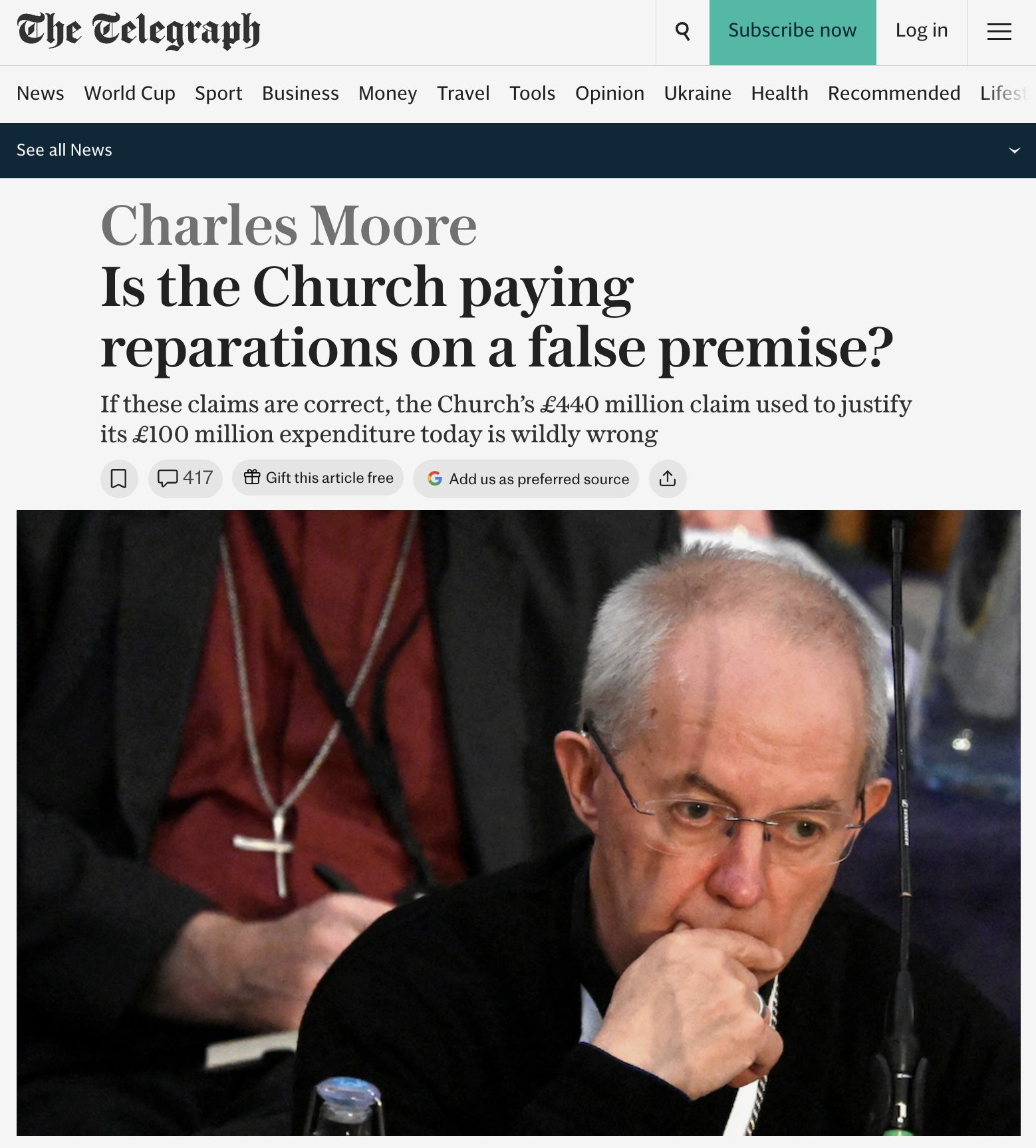
The Church Commissioners’ research distinguished between South Sea trading shares and annuities. Queen Anne’s Bounty initially held both, sold its trading shares and continued to acquire annuities. The Church Commissioners later committed £100 million to a programme of healing, repair and justice.
Critics argued that Treasury-funded annuity income had been confused with profits from slave trading. Others said that separating the annuities from the South Sea Company and the wider state system understated their historical connection.
A complex dispute about finance and causation became a simple public question: had the Church committed £100 million on a false premise?
That is the warning. The description of an eighteenth-century financial instrument can determine the legal meaning, the headline, the institution’s reputation and the reparations demands that follow.
4. Decide the position on apology and reparations
These questions should be settled before publication, not answered for the first time during a press interview.
Apology
An apology is not a line to add to a press release. It accepts responsibility.Before apologising, an institution should decide what it is apologising for, whose conduct it accepts responsibility for, who has authority to speak, to whom the apology is addressed and what action follows.
Without clear answers, an apology may appear symbolic or self-protective. Attention moves from the suffering of enslaved people and the evidence being published to the institution’s own display of remorse. It may be received as reputation management.
The stronger ethical starting point is truth: publish the research, acknowledge the suffering of those enslaved and explain clearly what the evidence proves.
Institutions should also avoid saying, “We will not apologise.” It is defensive, easily quoted and likely to become the headline. Choosing not to apologise at publication does not rule out a later response if the evidence or wider framework changes.
“I mean not to accuse anyone, but to take the shame upon myself, in common with the whole Parliament of Great Britain, for having suffered this horrid trade to be carried on under their authority. We are all guilty.”
Reparations
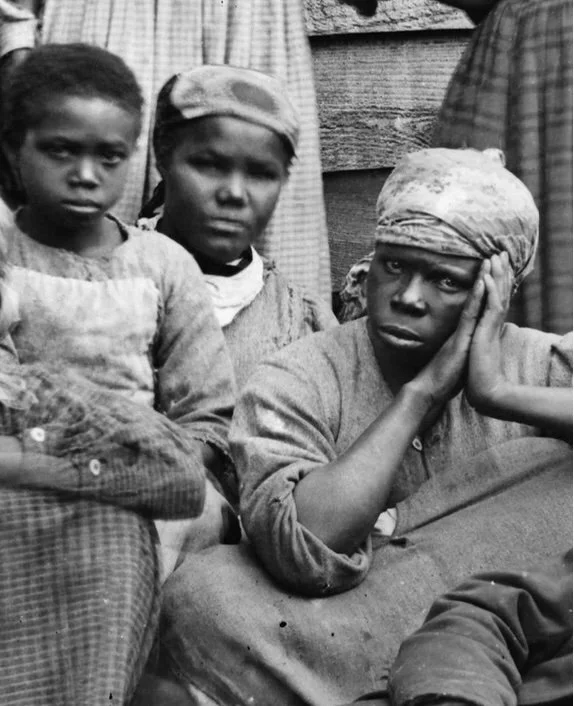
Formerly enslaved people on Foller Plantation, Cumberland
Landing, Virginia, 14 May 1862. Enslaved women and girls were
subjected to sexual abuse and violence.
Library of Congress, Prints and Photographs Division (LC-DIG-stereo-1s02415)
A historical report is not a reparations calculation. It may identify particular gifts, investments or other connections. It will rarely establish the institution’s total historic benefit, current liability or an appropriate remedy.
Any reparations commitment raises hard questions. How is responsibility established? How is loss assessed? Who sets the amount? What amount is appropriate for a crime against humanity? Who receives it? How are descendants or affected communities identified? What principle applies to other historical wrongs?
The institution under scrutiny cannot fairly act as investigator, judge and sentencer in its own case.
CARICOM has developed a reparations programme directed at former colonial powers and relevant institutions.
Legal advisers, including the British firm Leigh Day, have examined possible claims involving states, businesses, institutions and families. Published admissions, calculations and statements about historic benefit may therefore be used in reparations arguments.
Reparations should not be dismissed. But questions of responsibility, assessment and remedy require government and wider public debate.
5. Prepare for the media and public response
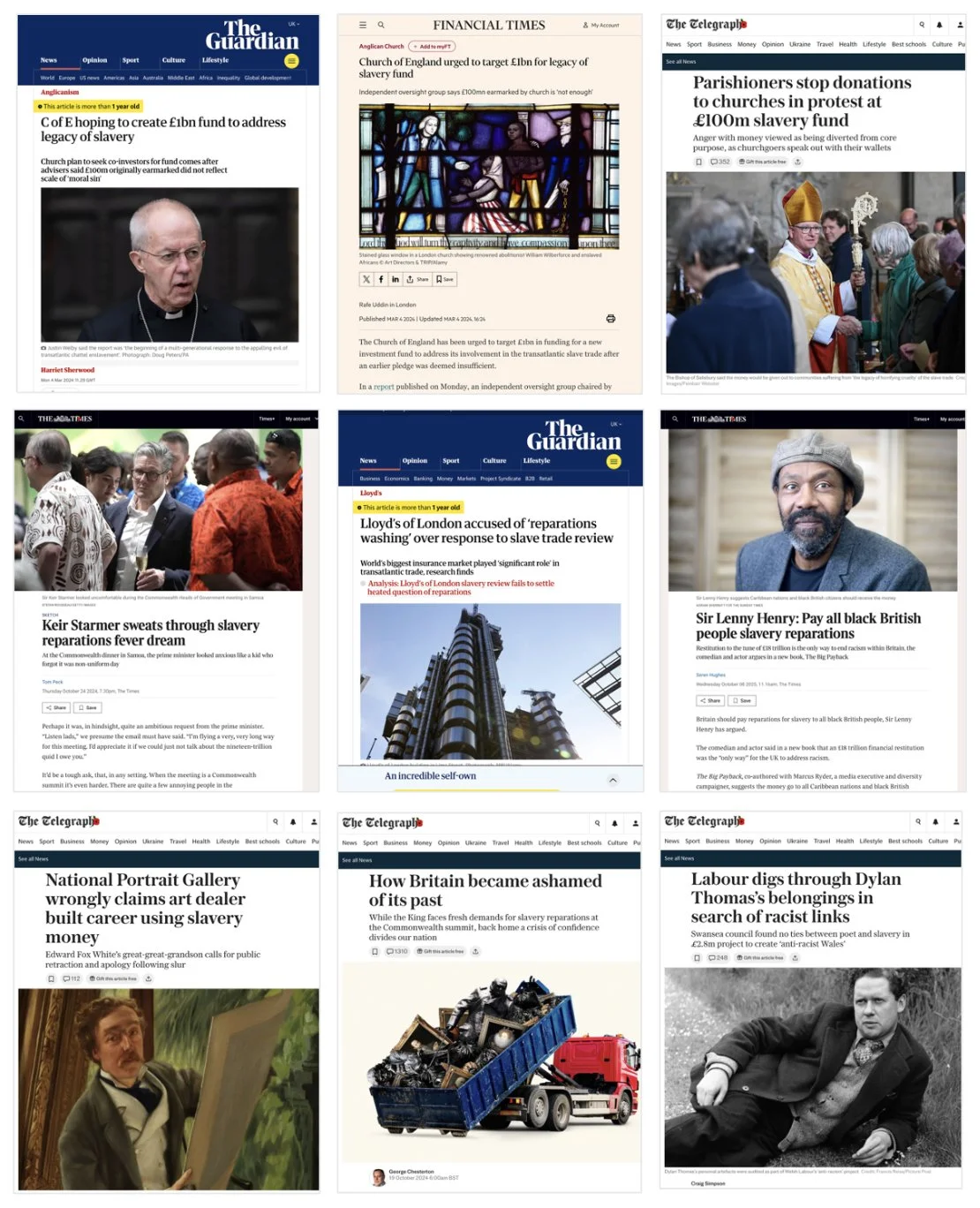
Editors know that reports about institutional links to transatlantic slavery reliably generate reader anger and large volumes of comments. A Telegraph article on reparations attracted over 9,900 comments; a Daily Mail article on reparations drew over 6,600, a Times article about reparations drew over 1,100.
Each newspaper has a recognisable line. The Guardian asks why publication has not led to apology and reparations. The Telegraph and Daily Mail frame the issue as “woke” virtue-signalling: they look for weak evidence, wasted money, inherited guilt and institutions straying from their proper purpose. The Times asks whether the research is sensible and proportionate. The Financial Times examines the finance, evidence and governance.
Below the line, those editorial differences largely disappear. Readers across the Mail, Times, Telegraph and Financial Times return to the same points: people are not responsible for their ancestors; institutions should concentrate on their proper work; modern slavery needs action now; and, if every historical wrong creates a current liability, there is no logical stopping point. The Guardian does not enable reader comments.
“When does historical liability begin and end?” asked an FT reader. Another wrote: “The Church of England neglects its parishes. It would help if it focused on this.” A third attacked spending on historic wrongdoing while “50 million are actually enslaved”, concluding: “They got their priorities spectacularly wrong.” A Times reader proposed taking reparations claims “in chronological order, starting perhaps with the Romans”. The comment received 480 upvotes.
Across titles, the response is not a balanced debate: the most highly rated comments are overwhelmingly hostile to apology, reparations and inherited responsibility.
These comments are not polling. They show the arguments the institution will meet on publication day.
These comments are not polling. They are the reaction the institution will meet on publication day. If the report understates the evidence, campaigners will allege a cover-up. If it overstates the evidence, families, historians, journalists and the public may challenge it. If the institution apologises, the next question will be what it will pay. If it pays, the questions will be how the sum was calculated, who authorised it and why those beneficiaries were chosen.
Expect a test of present-day conduct
Readers will also test the institution for hypocrisy. Has it examined its current investments and supply chains as closely as eighteenth-century records? Is it condemning the conduct of dead people while doing little about modern slavery? Is it publishing the links of former office-holders to claim credit for transparency, then calling those links personal to deny institutional responsibility? Strathem’s analysis found that readers repeatedly identify these contradictions.
An institution that has not prepared clear answers will lose control of the story within hours. Strong moral judgement of the past creates an expectation of serious conduct in the present.
This was the weakness of much “purpose-driven” communication. Language moved faster than action. Institutions spoke about issues they were not equipped or mandated to solve. Some audiences concluded that image had been prioritised over outcomes. The intended result was greater trust. The actual result was often greater cynicism.
This is a culture-war issue
A slavery report will not be read only as history. It will be pulled into arguments about empire, national identity, inherited guilt, immigration, elites and who belongs. Campaigners may present it as a test of whether the institution is serious about racial justice. Opponents may present it as proof that public bodies have been captured by “woke” politics.
That matters because institutional trust is already weak. Many people believe large public bodies are remote, politically partial and more interested in moral signalling than in doing their jobs. A report that is loose with evidence, heavy with moral language or silent on present-day contradictions can reinforce that view.
The risk is not just bad coverage. Public institutions are expected to steady civic life, not add fuel to a fight already under way. Every major claim should therefore pass three tests: is it accurate, is it necessary, and is it proportionate? The aim is not to avoid difficult history. It is to explain it without turning the institution into another combatant in the culture wars.
Treat publication as one project
The historian establishes the evidence. The media lawyer tests the legal meaning. The communications adviser tests what journalists, campaigners, descendants, staff, members and the public will understand.
Before publication, one team should review:
the original commission, scope and definitions;
the full report, appendices, captions and calculations;
every named person, family and institution;
each claim about financial benefit or inherited wealth;
the distinction between personal and institutional conduct;
the position on apology, reparations and present-day practice;
the language and tone, so the history is explained without being politicised;
the executive summary, website, Q&A and media materials;
stakeholder notification and consultation;
correction, monitoring and crisis procedures; and
the authority and preparation of every spokesperson.
These reviews cannot be carried out separately at the end. A lawyer cannot repair an unclear research brief once the report is finished. A communications team cannot explain a distinction the report itself has collapsed. A press release cannot settle questions about apology and reparations that the board has avoided.
The report, legal advice and communications plan must be developed as one project.
How Strathem can help
Strathem has advised institutions and families on research into links with transatlantic slavery since 2020. We have worked both with organisations preparing to publish and with parties challenging allegations made about them.
We have analysed six years of British press coverage, comparable institutional cases and thousands of below-the-line reader comments. We know where the evidence is likely to be challenged, how a complex finding becomes a damaging headline and what ordinary readers are likely to understand from the words used.
In partnership with Payne Hicks Beach, Strathem offers an integrated communications and legal team for this work. We review the research, test the legal and public meaning of each claim, identify gaps in the evidence, advise on notification, shape the public materials and prepare the institution for questions about responsibility, inherited wealth, apology, reparations and present-day conduct.
This brings legal, reputational and ethical risk into one process. It avoids the common failure in which the historian, lawyer and communications team review different documents, at different stages, against different tests.
The work should begin before the final report is approved. At that point, there is still time to correct the evidence, sharpen the language, align the report with the public materials and settle the questions that would otherwise be answered under pressure.
For an institution approaching publication, the practical next step is an independent pre-publication review of the report, its legal meaning and the full communications plan.
About Laura Peek
Since 2020, Laura has worked on a number of projects involving institutional links to transatlantic slavery. Her research has covered British press coverage and reader reaction, the experience of institutions that have published, the legal and ethical treatment of named families, and the ethical questions raised by apology and reparations. She studied first-person accounts by formerly enslaved people as part of her master’s degree.
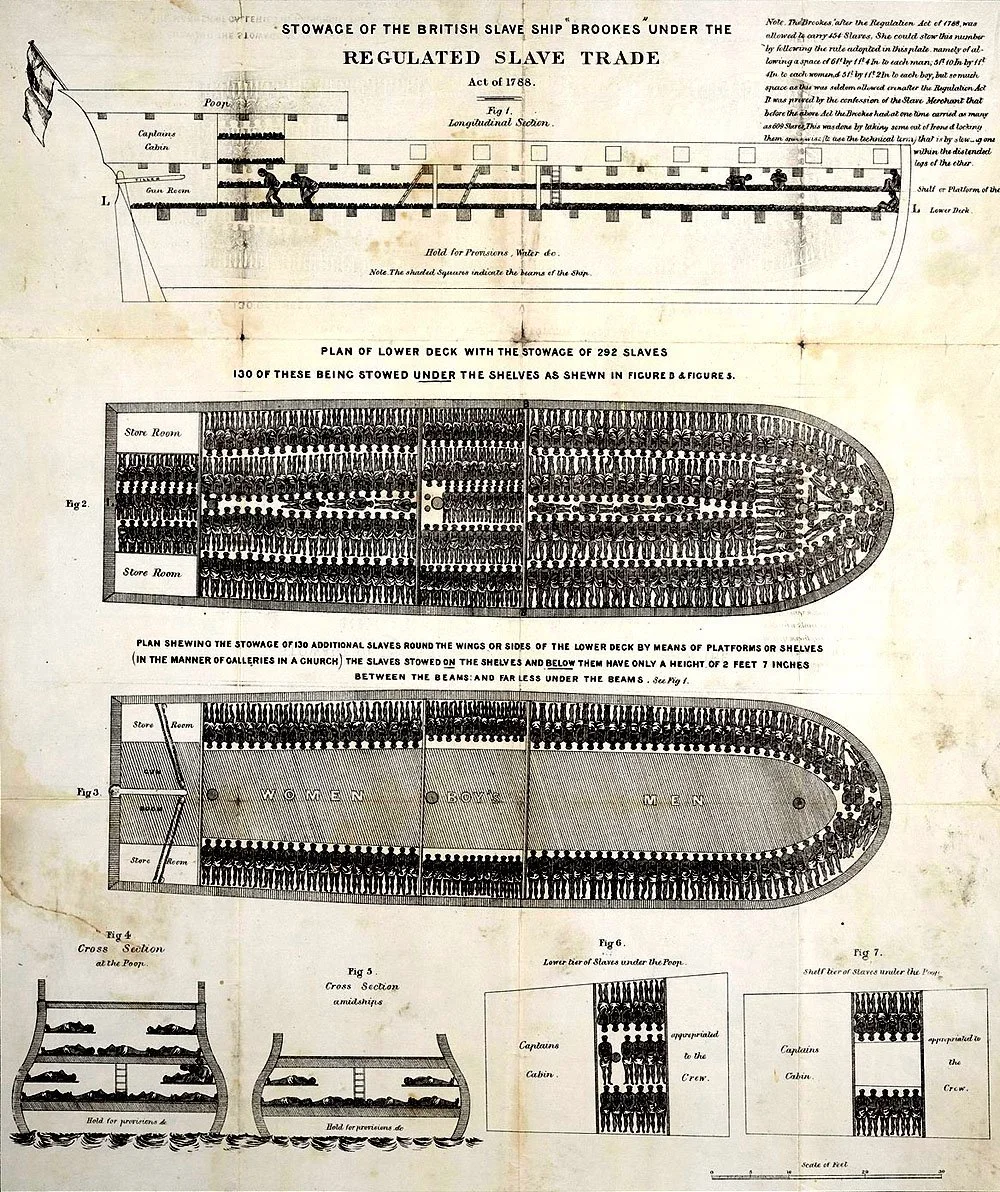
"Not everything that is faced can be changed, but nothing can be changed until it is faced."
– James Baldwin